Updated 2026-08-15 · by Equipo Técnico
Pigeons under the roof: cleaning, disinfection and sealing the way back in
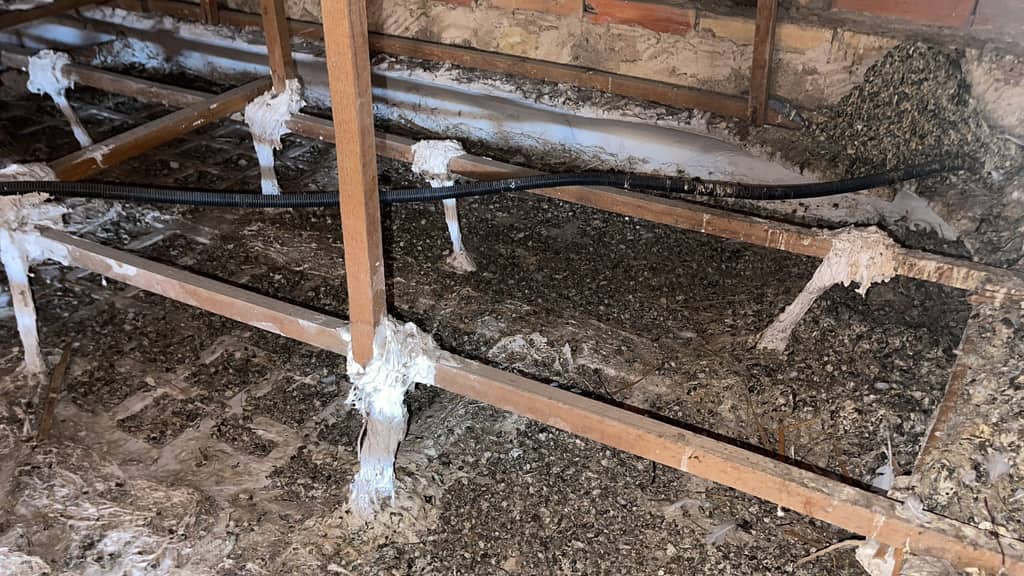
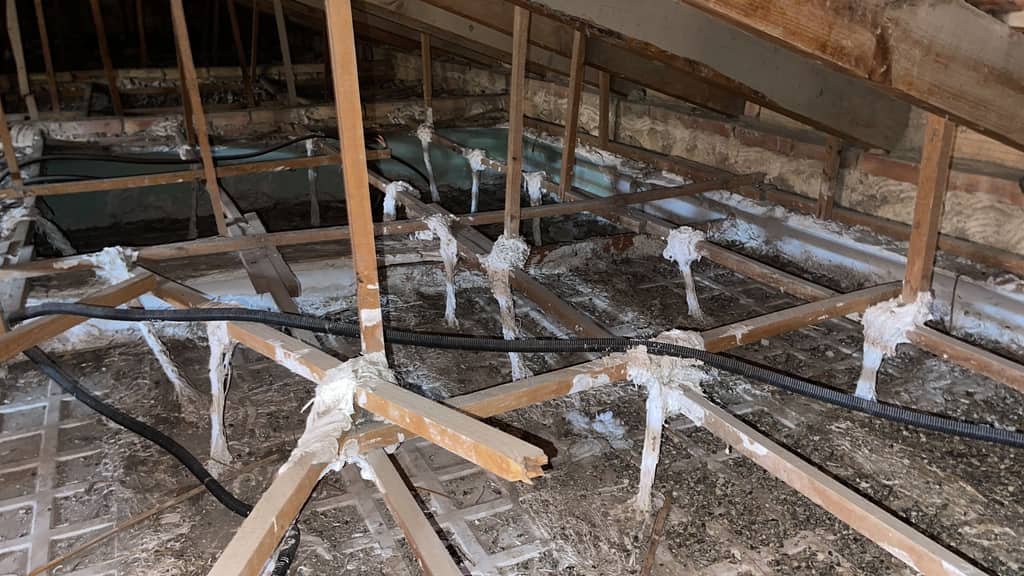
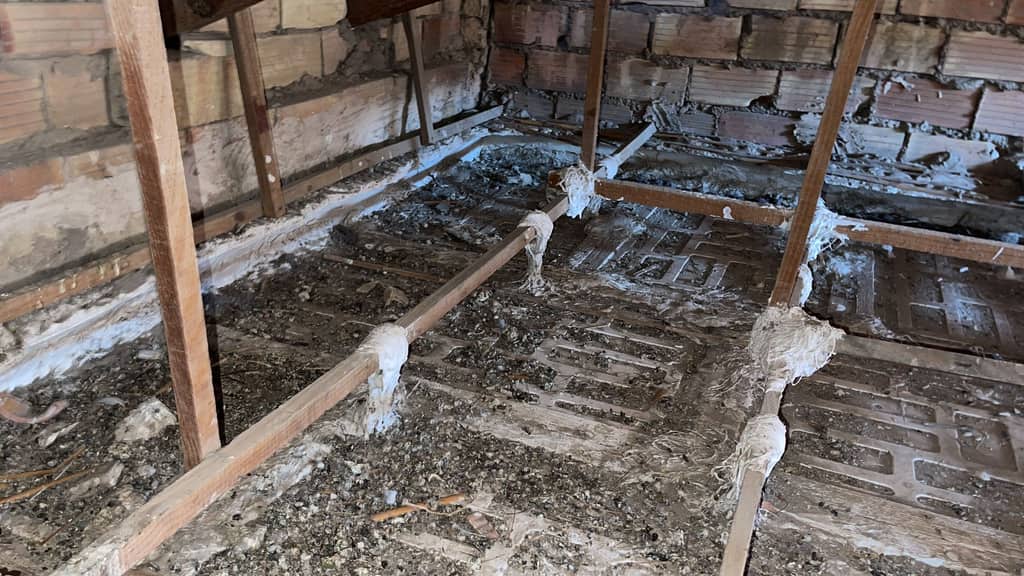
A pigeon colony living in the roof void leaves, within a few years, several centimetres of guano and nest material spread across the joists. It is not just dirt: droppings are hygroscopic and acidic, they hold moisture against the timber and corrode it, and once dry they produce a dust that must not be breathed. The clean-up is done wet and with respiratory protection, never by sweeping dry — and it is wasted money unless the gaps the birds come through are closed afterwards. This is the order the work has to follow.
The roof void — the space between the top floor slab and the tiles — is close to ideal for a pigeon: dry, dark, sheltered from wind and free of predators. One cracked tile at the eaves, a broken ventilation grille or a gap at the gable end is enough to let them in. And pigeons are loyal to a site: they come back to the same spot year after year, so what starts as one pair ends up as a colony.
Owners almost never spot it from the void itself, because nobody goes up there. They spot it from noise in the top-floor ceiling, from a smell that appears in summer, or from a damp patch that gets investigated and ends in a surprise.
What guano does to the building
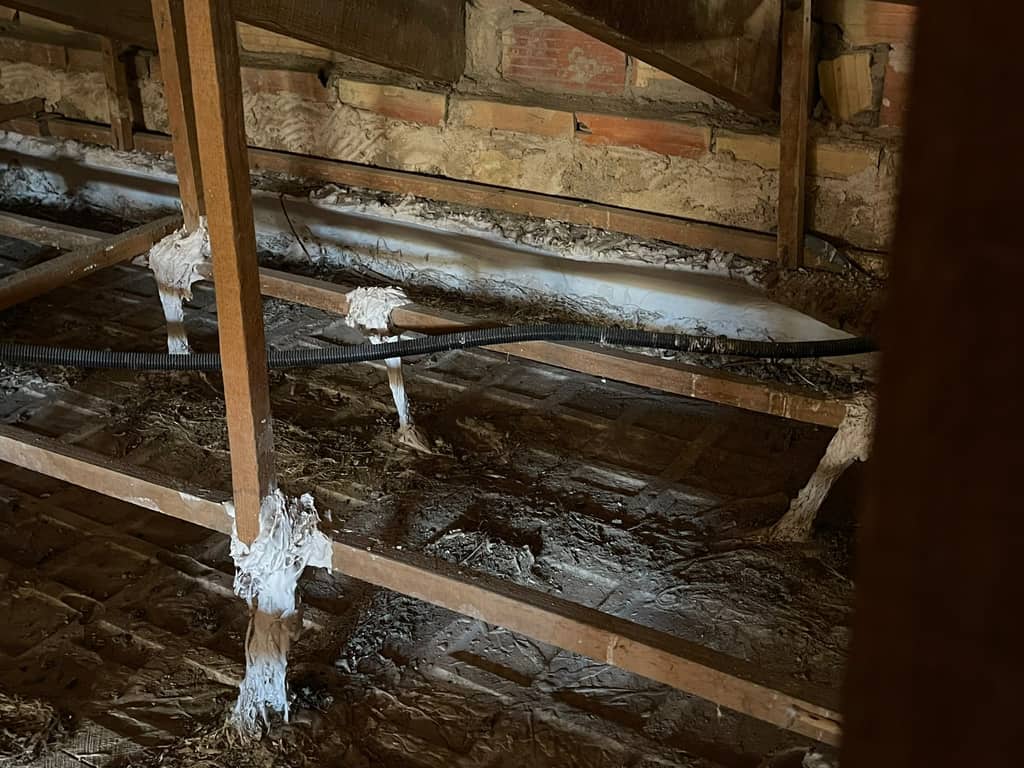
Pigeon droppings tend to be filed under hygiene, and they are — but the damage that costs most is structural. Guano contains uric acid and salts, is strongly hygroscopic, and settles directly on top of the elements you least want to keep wet.
- It keeps joists and purlins permanently damp, which opens the door to rot and wood-boring insects.
- It corrodes nails, straps, brackets and any metal fixing it touches.
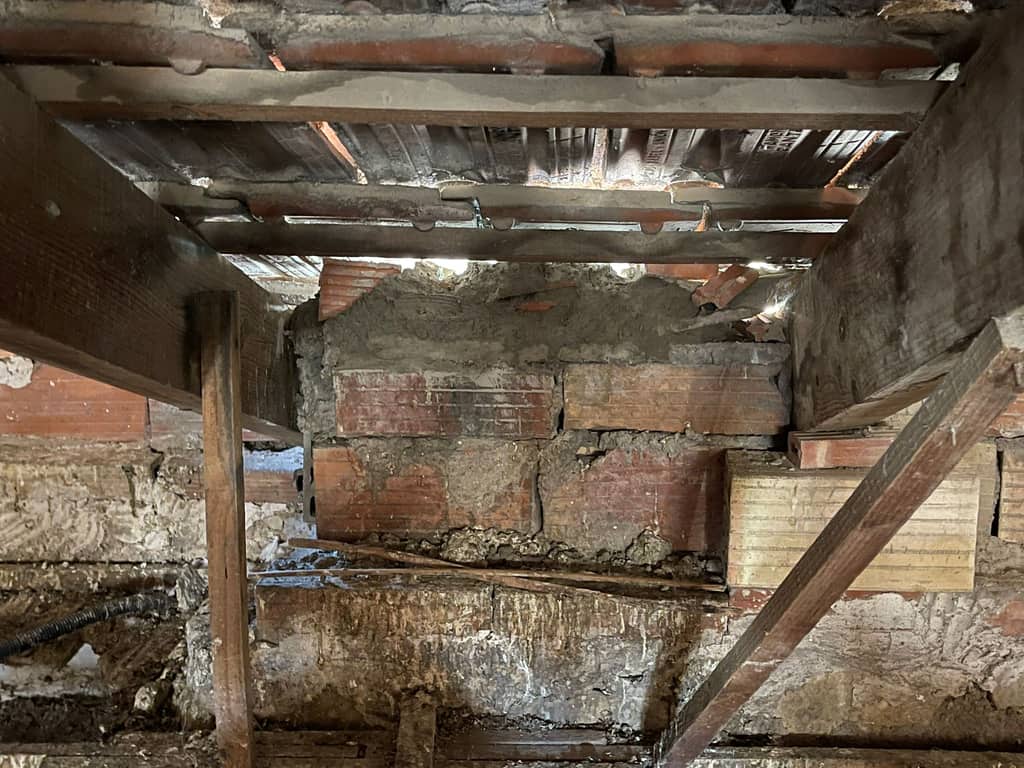
- It attacks the mortar and the clay pot infill of the slab, which breaks down and loses cohesion.
- It adds real dead load: several centimetres across the whole area weighs a lot, and it is load the slab was never designed for.
- Nest debris blocks gutters, downpipes and grilles, so the roof stops draining and stops breathing.
- With the ventilation blocked, condensation forms — which then damps the ceiling of the flat below.
That last chain explains why so much top-floor damp cannot be fixed by painting or by treating the ceiling from inside. The cause is above it: a void that has stopped ventilating and timber that has not dried out in years.
Why dry guano is never swept
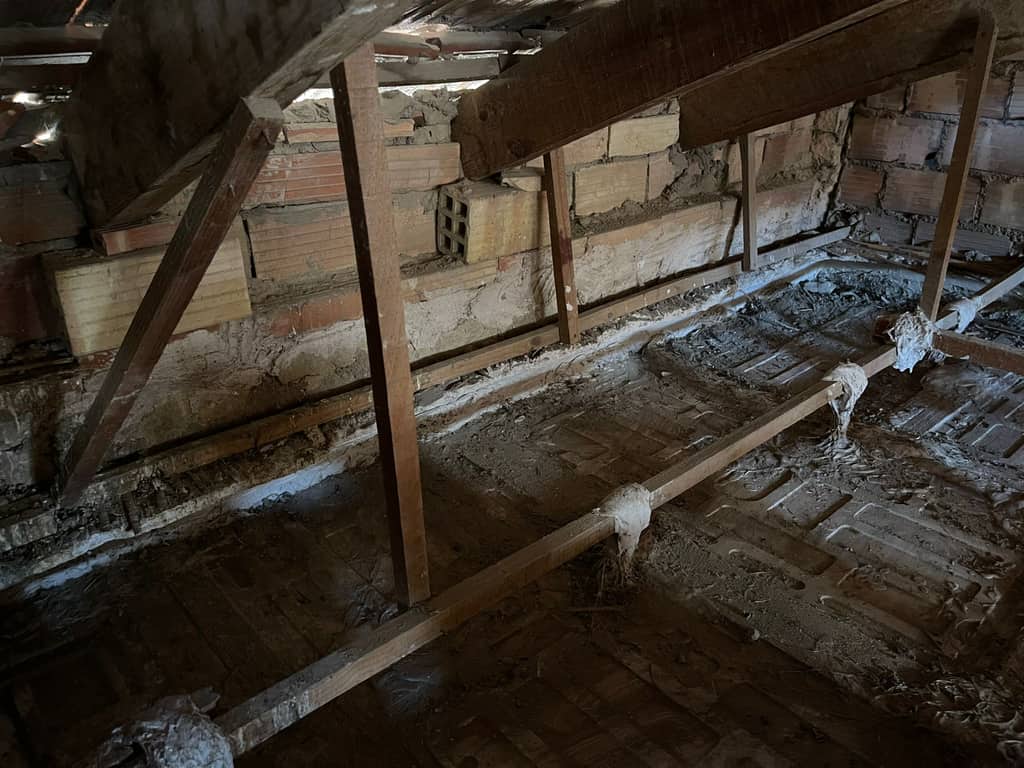
This is the part most often ignored and the one that matters most. Dry guano crumbles into dust easily, and that airborne dust is how several pathogens reach the lungs. In a sealed, unventilated space like a roof void, sweeping dry or blowing it out with compressed air is precisely the wrong move: it turns a stable deposit into an aerosol.
- Histoplasmosis and cryptococcosis: fungal respiratory infections from organisms that grow in accumulated droppings.
- Ornithosis or psittacosis: a bacterial infection that presents as atypical pneumonia.
- Salmonella and other enteric bacteria present in the droppings.
- Mites and the pigeon tick (Argas reflexus), which leave the nest once the birds go and move down through the building looking for another host.
The correct method is the opposite: wet everything down before touching it so the material cannot become dust, and work in an FFP3 mask, disposable coveralls, gloves and goggles. This is not a theoretical precaution — in a void with years of build-up it is the difference between a routine job and a health problem.
How it is done, step by step
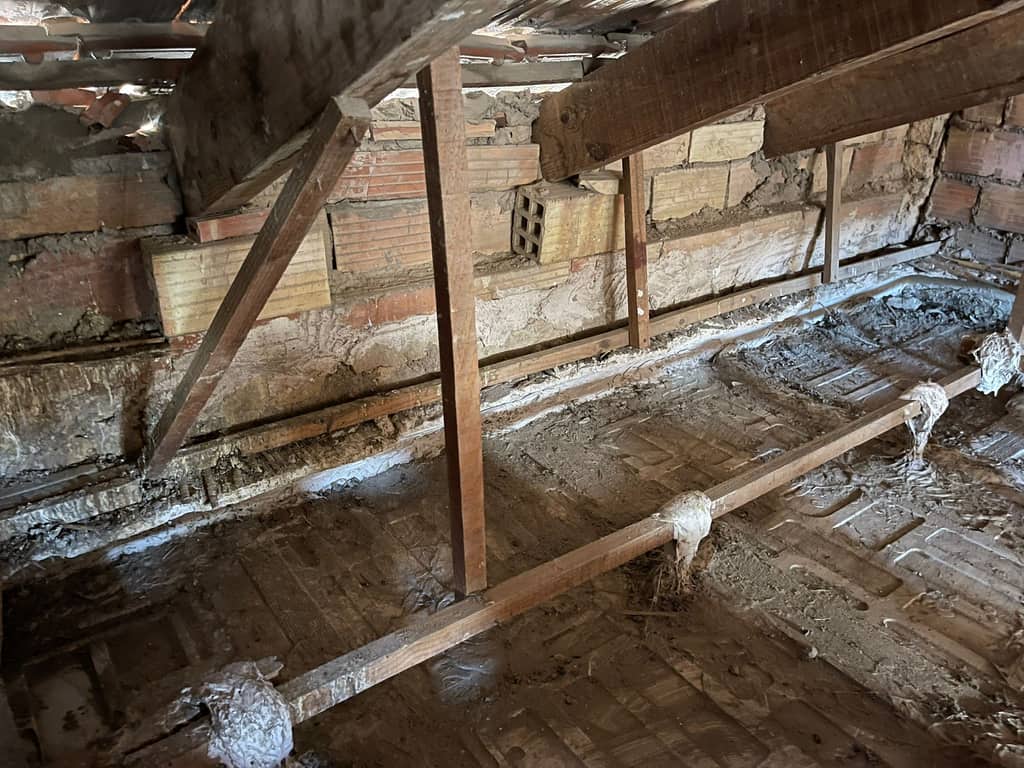
The sequence matters, because each stage depends on the one before. Cleaning before closing the entry points wastes the money; closing before cleaning seals the problem inside.
- Inspection: walk the void to find the entry points, assess the timber and estimate the volume of waste. This is where any structural repair gets decided.
- Containment: the hatch from the dwelling is sealed so dust cannot travel down, and routes are protected.
- Wetting down: the whole surface is sprayed with disinfectant before anything is lifted, so the material stays bound and produces no dust.
- Removal and bagging: guano and nest material go into sealed bags and are handled as waste, not as ordinary rubble.
- HEPA-filtered vacuuming for the fine residue left after the bulk removal.
- Surface disinfection with an authorised biocide.
- Repair: damaged timber replaced, broken clay pots and tiles made good, and any mortar that has broken down cut out and rebuilt.
- Closing the entry points and restoring ventilation — the stage that stops the colony coming back.
One honest note on step six: in Spain, applying biocides in occupied buildings is a regulated activity and must be carried out by a company on the ROESB register with certified operatives. We do the clean-up, the building repairs and the proofing, and we coordinate the disinfection with a registered firm. Be wary of anyone offering the whole package without mentioning that register.
Closing the way in decides the outcome
A clean void with open gaps is reoccupied within a season. Pigeons return to where they were raised, so proofing is not an add-on: it is what gives everything before it any value.
- An eaves comb under the first course of tiles, which closes the gap in the tile profile without stopping the roof breathing.
- Stainless steel mesh on ventilation grilles and gable openings: it stops the bird and keeps the airflow, which is exactly what filling the hole with mortar does not.
- Replacing cracked or slipped tiles and sealing the ridge and valley junctions, which are usually the real point of entry.
- Spikes or tensioned wire on cornices and parapets where the birds land before going in.
- Clearing gutters and downpipes, since dragged nest material is what blocks them.
Worth knowing: the methods must deter rather than harm, and removing active nests is restricted during the breeding season. Proofing done properly needs nothing else — if the bird cannot get in, it goes elsewhere.
Why it is done together with the roof repair
Nearly always, the gap that lets the pigeon in is the gap that lets the water in. The cracked eaves tile, the badly sealed valley or the open ridge are at once the bird’s door and the source of the leak. So once you are on the roof with access equipment already up, fixing only one of the two makes little sense.
Combining the two jobs saves rigging access twice, lets the timber be inspected with the roof partly lifted — which is when its condition is actually visible — and leaves the void ventilated and dry, which is the only way the repair lasts.
Stages and indicative durations for a full intervention
| Item | Detail |
|---|---|
| Void inspection and photo reportneeded to size everything else | 1 visit |
| Containment, wetting down and guano removalby area and depth of build-up | 1-3 days |
| HEPA vacuuming and disinfectionROESB-registered contractor | 1 day |
| Replacing damaged timber and clay potsonly where the inspection finds it | 1-4 days |
| Eaves comb and mesh to grilles | 1-2 days |
| Tile replacement, ridge and valley sealingruns with the roof repair | 2-5 days |
| Final check and water-tightness test | 1 visit |
If you have noise in the top-floor ceiling, a smell that sharpens in the heat, or a damp patch nobody can quite explain, the first step is to open the void and look. The inspection is quick and settles at once whether the problem is the roof, the pigeons or both. Ask for a visit and we send you the photo report.