Updated 2026-07-30 · by Equipo Técnico
Plasterboard in Alicante: partitions, ceilings and dry lining
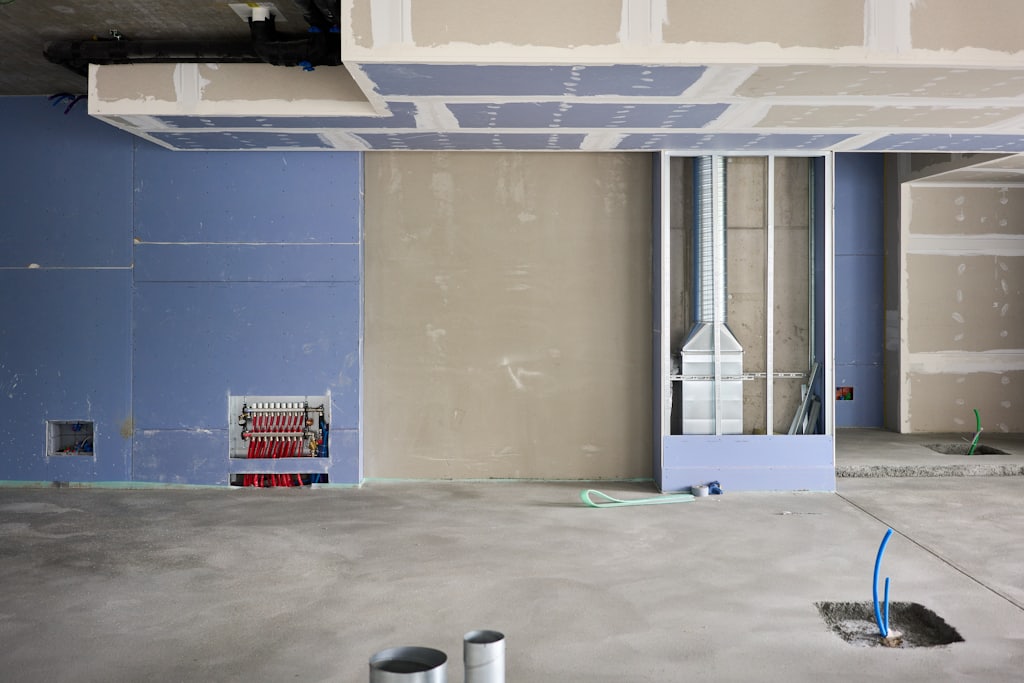
Plasterboard, known in Spain as "pladur", is a dry construction system used to build partitions, ceilings and dry lining on a metal stud frame. It is chosen because it is clean and fast (a partition goes up in hours, not days), because insulation can be built inside the wall, and because cables and pipes run hidden with no chasing out. In Alicante it is the standard way to re-plan a flat, create a dressing room or build a ceiling with cove lighting, with no rubble and no weeks of mess.
When someone asks for "pladur" what they are really asking for is dry construction: plasterboard sheets screwed to a galvanised steel stud frame, with mineral wool inside. Pladur is a brand name that became the generic term in Spain, much like other trade names elsewhere. What matters is not the brand but the system: it goes up with no water, no mortar and no rubble, which is why it has become the default in renovations of occupied homes across the province.
What plasterboard is used for in a renovation
Most people associate it only with partitions, but in a renovation it solves far more problems. These are the uses we are asked for most in Alicante.
- Partitions and dividing walls to re-plan a home: creating a bedroom, splitting a living room or closing off a dressing room.
- Suspended ceilings to conceal beams, soil pipes or ducted air conditioning.
- Ceilings with a perimeter cove for indirect lighting and recessed spots, which completely change the feel of a room.
- Dry lining: lining an existing wall from the inside to add thermal or acoustic insulation and gain comfort.
- Boxing in soil pipes, exposed pipework and ducts that spoil a room.
- Lightweight built-in furniture: alcoves, shelving, headboards and integrated TV units.
- Repairing or replacing ceilings and partitions damaged by a leak, which is very common in coastal flats.
Plasterboard or brick: where each one wins
The question comes up on almost every visit. There is no outright winner: there is a better system for each case, and it is worth deciding on the facts rather than out of habit.
- Speed: a plasterboard partition is built and ready to paint in hours or a couple of days; brick needs setting, plastering and drying time.
- Cleanliness: it produces almost no rubble or wet-trade dust, which is decisive if you are living in the home during the work or the community limits working days.
- Insulation: mineral wool fits inside the partition, so a well-built plasterboard wall blocks sound better than a simple hollow-brick one.
- Weight: it weighs far less, which matters in refurbishments and on the old timber floors of village houses.
- Services: cables and pipes run inside the studs, with no chasing out of the wall.
- Brick: still preferable for walls exposed to direct moisture, in areas that take constant knocks, or where very heavy loads must be hung without planning ahead.
- Reversibility: altering or opening up a plasterboard wall later is simple and cheap.
Plasterboard ceilings: far more than hiding a beam
The ceiling is where plasterboard transforms a home most. A suspended ceiling levels out an irregular slab, hides air conditioning ducts, soil pipes and cabling, and leaves a perfect surface to paint. Built with a perimeter cove it gives indirect lighting, and with well-placed access hatches the air conditioning units stay reachable for servicing. Expect to lose between 8 and 20 cm of height depending on what has to pass through, so in homes with low ceilings it is worth working out beforehand.
Dry lining: insulating from inside without touching the facade
The Costa Blanca has a great many homes built between the 1960s and 80s whose facade walls have no cavity and no insulation: they overheat in summer, feel cold in winter and grow condensation in the corners. When you cannot work from outside, because the community will not approve it or the facade is protected, internal dry lining is the alternative: a frame is built inside, filled with mineral wool and closed with board. You lose a few centimetres of room, but you gain thermal comfort, cut the air conditioning bill and see surface condensation disappear. It is also the most effective fix for a noisy neighbour.
Board types: not all of them work everywhere
Choosing the wrong board is the most common mistake, and the cause of the problems later blamed on the system itself. Each part of the home has its own.
- Standard board: the usual choice for partitions and ceilings in dry rooms such as bedrooms and living rooms.
- Moisture-resistant board: treated against humidity, and essential in bathrooms, kitchens and utility rooms.
- Impact-resistant board: for hallways, circulation areas and rental properties where knocks are frequent.
- Fire-rated board: for boxing in services and for separations that require it.
- Acoustic board with higher-density mineral wool: when blocking noise is the main goal.
Timescales: why it is called clean work
The great argument for plasterboard is that you can carry on living in the house. There is no mixing, no water running across the floor, and the waste is limited to offcuts of board and stud bagged and taken away. Dust appears mainly when sanding the jointing compound, and that is controlled with a vacuum sander and plastic sheeting.
Indicative timescales for plasterboard work
| Item | Detail |
|---|---|
| Dividing partition for one roomframe, board and jointing included | 1-2 days |
| Suspended ceiling to one room | 2-3 days |
| Ceiling with cove for indirect lighting | 3-5 days |
| Dry lining to a facade walldepending on area | 2-4 days |
| Boxing in a soil pipe or services run | 4-8 hours |
| Jointing, sanding and primingwith drying time between coats | 1-2 days |
| Full re-plan of a flat | 1-2 weeks |
What sets the price of plasterboard work
The price does not depend on square metres of board alone. These are the factors that genuinely move a plasterboard quote.
- The area, and whether it is a partition, a ceiling or dry lining: ceilings need more labour and access equipment than walls.
- The number of layers of board and the board type chosen (standard, moisture-resistant, impact-resistant, acoustic).
- The insulation inside: thickness and density of the mineral wool, depending on whether you want thermal or acoustic performance.
- Geometric complexity: coves, curves, changes of level and alcoves multiply the hours.
- Services to be housed inside: electrics, plumbing or air conditioning ducts.
- The finish level of the joints, which decides how the wall looks under raking light.
- The condition of the existing structure and walls, and how easy it is to get materials into the property.
Three myths about plasterboard
- That it will not hold weight: it will, but the fixing has to be right. With the correct anchors you can hang a picture or a light shelf; for a television, wall units or a radiator we build timber or steel noggins into the partition during construction. That is why it helps to say in advance what you plan to hang and where.
- That it is no good in bathrooms and kitchens: it is fine, always with moisture-resistant board and with proper waterproofing in the shower area before tiling. The problems come from using standard board where it does not belong.
- That you hear everything through it: a plasterboard partition with a double layer of board and mineral wool blocks sound better than many hollow-brick walls. Acoustic performance depends on the whole system, not on the material alone.
Want to re-plan your home, build a ceiling with indirect lighting or insulate a wall from the inside? We visit the property, measure up, tell you honestly whether plasterboard is the right answer for your case or whether something else suits better, and prepare a personalised, no-obligation quote, with our own in-house team and a 2-year guarantee.